

The Center for Environmental Farming Systems’ Blog
Featured Publication: Focusing the Future of Farming on Agroecology
Dr. Alan J. Franzluebbers and Dr. Nancy Creamer recently contributed to a publication, "Focusing the Future of Farming on Agroecology" in Agricultural & Environmental Letters.

CEFS launches online Climate Change and Food System Innovation Hub
Media Contact: Janie Hynson Communications Manager janie_hynson@ncsu.edu [Raleigh, NC – September 25, 2020] — Today, on Global Day of Climate Action, the Center for Environmental Farming Systems (CEFS) launched an online Climate Change and [...]

The Center for Environmental Farming Systems Announces Recipients of 2020-2021 NC State Graduate Student Fellowships
The Center for Environmental Farming Systems Announces Recipients of 2020-2021 North Carolina State University Graduate Student Fellowships September 1, 2020: FOR IMMEDIATE RELEASE Media Contact: Angel Cruz, Academic and Extension Initiatives Manager - aecruz@ncsu.edu [...]

Dr. Dara Bloom named Assistant Director of Community Based Food Systems at CEFS
RALEIGH (July 15, 2020) — Dr. Dara Bloom was recently named (Interim) Assistant Director of Community Based Food Systems at the Center for Environmental Farming Systems (CEFS), effective July 1, 2020. Dr. Dara Bloom, is [...]

CEFS stands with Black, Indigenous and all People of Color
In these troubled times, the Center for Environmental Farming Systems (CEFS) stands with Black, Indigenous and all People of Color (BIPOC) and we condemn the impacts of systemic racism on individuals, families, communities and [...]

CEFS COVID-19 Portal
Like so many others, CEFS initiatives and research units have been impacted by COVID-19. Staff and affiliated faculty have adapted quickly to the new environment and are continuing their programming and research projects in compliance [...]

Twenty-Five Years of CEFS: Strong Roots, Sustained Growth
Stepping into CEFS’ early days, it was clear right away what made this new initiative different: it was an innovative, interdisciplinary, collaborative effort between different departments at multiple universities, and included voices from non-profit organizations, farmers, and the general public.

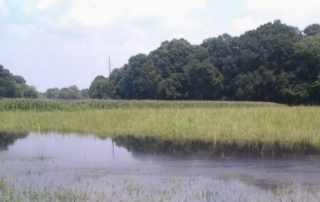
NC Department of Agriculture and Consumer Services Staff Fight Hurricane Florence Floodwaters at CEFS’ Field Research, Education and Outreach Facility
Hurricane Florence is one of the worst storms to hit North Carolina, ever. CEFS' Field Research, Education, and Outreach Facility at Cherry Research Farm is located in Goldsboro, one of the hardest-hit areas of the state. NC Department of Agriculture and Consumer Services Research Station Manager Andy Meier and his crew have gone above and beyond -- as they always do in extreme situations -- to protect and care for livestock on the farm and minimize damage to crops and infrastructure.

Local Food Councils Tackle Hunger and Food Access Issues in North Carolina
Even though it is only 7 a.m., the conference center is buzzing with activity. Representatives from food councils across North Carolina have called an impromptu meeting to discuss a response to federal budget cuts which threaten funding for the Supplemental Nutrition Assistance Program, or SNAP, the largest program in the domestic hunger safety net.

UFOODS Supports Value Chain Collaboration to Bring Local Food to Campus at UNC-Pembroke
UNC-P more than doubled their year-over-year percentage of local produce (defined as sourced within 250 miles) purchased through FreshPoint, from 3.35% to 8.9%.

Building Community and Capacity at the 2017 NC Statewide Food Council Gathering
We continue to be inspired by these convenings as a way to strengthen relationships and voices to build power in our local communities.

Events for Local Government Officials Highlight Economic Development Potential of Local Food and Farm Businesses
In September, Local Food Economies and the NC 10% Campaign organized three Innovations in Economic Development through Local Foods gatherings to showcase investments that local and regional governments can make to support small and mid-scale food and farming businesses.