
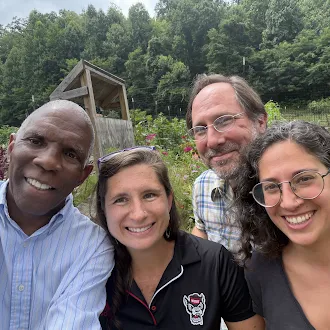
On July 28, Reginald Speight, Assistant Secretary of Rural Economic Development at the N.C. Department of Commerce, visited Western North Carolina to learn more about CEFS career pathways programs supporting youth and agricultural communities in the region. As Assistant Secretary, Speight leads a team of experts focused on strengthening rural communities across the state. He previously served as USDA Rural Development State Director for North Carolina, where he oversaw programs supporting rural housing, community facilities, business development, water and environmental infrastructure and broadband.
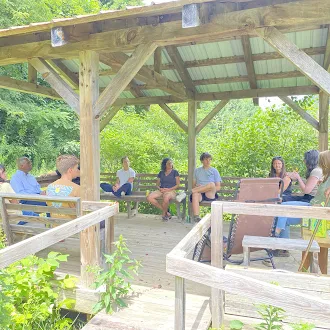
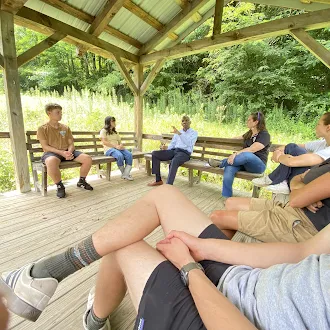
Speight met with CEFS Academic and Extension Initiatives Manager Angel Cruz, other CEFS staff, WNCStrong Youth Service Corps participants and host site partners at Dig In! Community Garden in Burnsville for a roundtable discussion about the program and its role in Western North Carolina’s recovery and resilience following Hurricane Helene.
“I understand how local food initiatives positively impact those who have access challenges. I also understand how food as medicine and nutrition bolsters economic development. This endeavor is not only impactful on youth leadership development and the agricultural workforce development pipeline, but also, it enhances community wellbeing.”
Launched in 2025 through a USDA Rapid Response Grant, the WNCStrong Youth Service Corps connects two critical needs in communities recovering from Hurricane Helene: farms needing additional labor and young people seeking paid, meaningful opportunities to learn, contribute and reconnect with their communities.
Through the program, high school students complete paid internships with farms in their communities, supported by local teacher mentors. Participants gain hands-on agricultural experience, participate in career-readiness workshops, serve additional farms through group workdays and develop individual projects that contribute to community recovery and resilience.
Since its launch, WNCStrong has placed 37 youth interns with 14 Western North Carolina farms, providing approximately 180 hours of on-farm work-based learning per participant. Participants have also contributed more than 1,100 hours of group work supporting 13 additional farms, while 17 youth have designed and implemented community resilience projects.
The visit highlighted CEFS’ commitment to creating work-based learning pathways into agriculture. CEFS developed and coordinates North Carolina’s first Registered Agricultural Apprenticeship programs focused on sustainable agriculture, providing paid, structured training for military Veterans and aspiring farmers.
Through these programs, apprentices work alongside experienced farmers while completing technical instruction, workshops, farm tours and skills assessments. To date, 20 apprentices have graduated, with 85% working in farm management positions or owning their own farms, while 16 active apprentices are currently training on farm operations across North Carolina.
Looking ahead, CEFS is working to develop WNCStrong into an agricultural pre-apprenticeship aligned with ApprenticeshipNC. The goal is to create a clearer pathway from high school work-based learning to Registered Apprenticeship, postsecondary education and agricultural employment.
Together, these programs demonstrate how work-based learning can help build the next generation of agricultural professionals while strengthening farms and communities across North Carolina.
Learn more about CEFS career pathways programs, including the WNCStrong Youth Service Corps and agricultural apprenticeships.