
EmPOWERing Mountain Food Systems (EMFS), an initiative of the Center for Environmental Farming Systems (CEFS), works to strengthen the local food system across 12 Western North Carolina counties and the Qualla Boundary of the Eastern Band of Cherokee Indians.
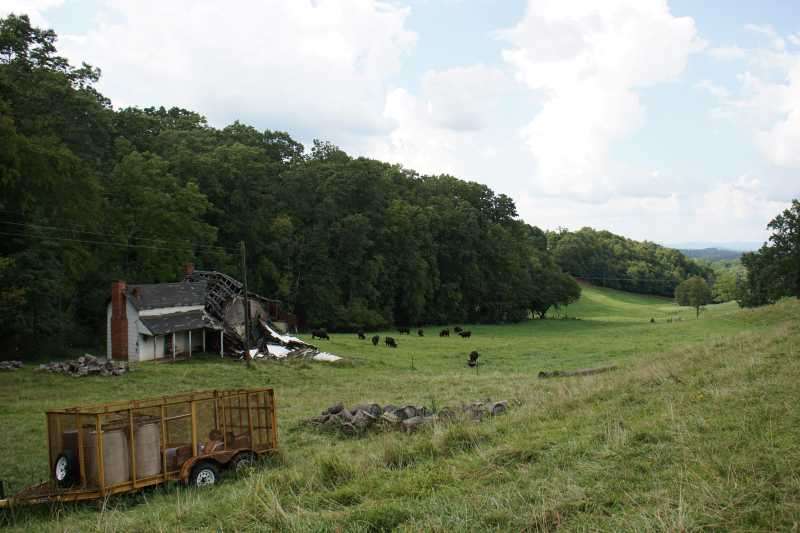
The arrival of Hurricane Helene underscored the importance of this work. Severe disruptions to farms, local businesses, and food hubs threatened food security and farm viability across the region. Immediately after the storm, EMFS distributed 40 grants totaling $101,092 to support emergency recovery needs. Working with the Mountain Horticultural Research team and Country Farm & Home in Pittsboro, the initiative also supplied replacement fencing to 12 livestock farmers. For many farms, this support was not only financial but was especially important in a moment when the overwhelming destruction brought by the storm made many feel hopeless. Thanks to the EMFS grant program, these farmers were not only able to recover some of the losses they sustained, but they were also able to imagine a new future for their business.
Big Bottom Milk Company in Rutherford County, co-owned by Stuart Beam and Preston Green, lost 85% of its corn crop but managed to keep its 70-head dairy operation going after the hurricane with its generators. They collaborated with the Rutherford County Cooperative Extension office and other agencies to serve as a distribution site for hay and fencing and helped deliver fuel, water, fencing, and feed to small farmers in coves and valleys where aid had not arrived. While Big Bottom Milk Company had crop losses over $200,000, a grant awarded by EMFS allowed them to keep their payroll going, supporting essential staff to keep Big Bottom milk on shelves. EmPOWERing Mountain Food Systems is grateful to the Community Foundation of WNC for their grant to support meat processors and dairies damaged by the storm.
According to Beam, “…Ingles could not get milk to the stores, and Ingles could not get any milk out. The milk situation made us realize how big of [an] this event was; the stores asked us to bring milk straight to them. We were able to do that. Our distributor was washed away, their warehouse and coolers were destroyed and their trucks were washed away. We became a distribution center and delivered milk to Knoxville. The only way we could do this was with our generators – all dairies have to have a generator at this level of production. We had one for the dairy and one for the milk plant. A store in Asheville asked if we could bring water – we started bottling water on Monday and we ran through every milk jug we had that day, 3,000 jugs. We started a fundraiser to buy more jugs. We were bottling milk in the morning, during the day, then at 4pm we would start bottling water until midnight. People heard what we were doing and showed up to help. We ran that operation for a month and a half. We were sending cases of water to the relief stations, then we got a permit from the Department of Agriculture to use water from the milk plant for public water use…
Altogether, we moved 45,000 gallons of water in a month. We bottled over 25,000 gallons. Our truck yard was used by the Department of Agriculture and Extension for supplies. We had NCDA and USDA employees helping us unload, reload, and distribute ag supplies. Jeff Bradley, Rutherford County Extension Director, and I figured out we had 500k of supplies that came through here. We were the delivery and distribution point for thousands of bales of hay and fence supplies. I am so proud of what our employees and friends did during that period…The support from EmPOWERing Mountain Food Systems helped us meet recent payroll and keep our operation running. We had $245,000 loss due to Hurricane Helene. Every bit of support helps keep this farm in operation.”


Another farmer, Angel Page of Shiloh Farms & Homestead, LLC, noted:
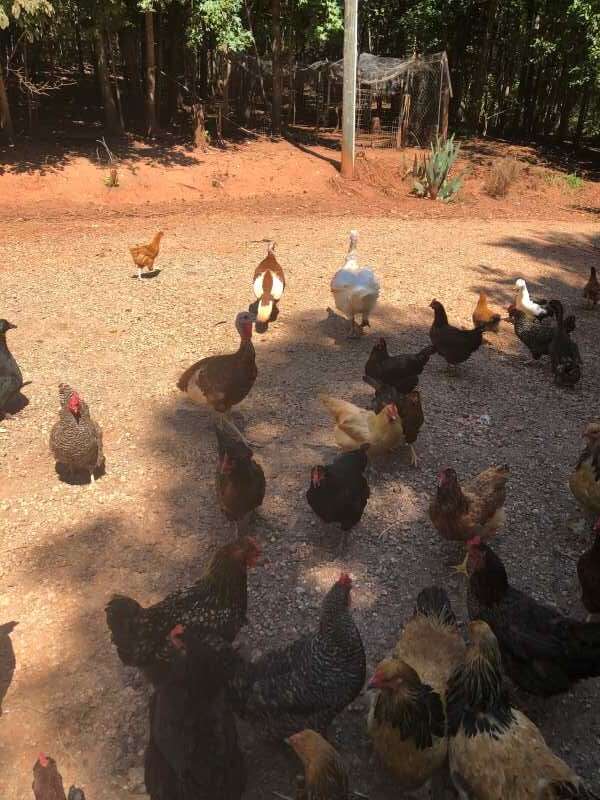
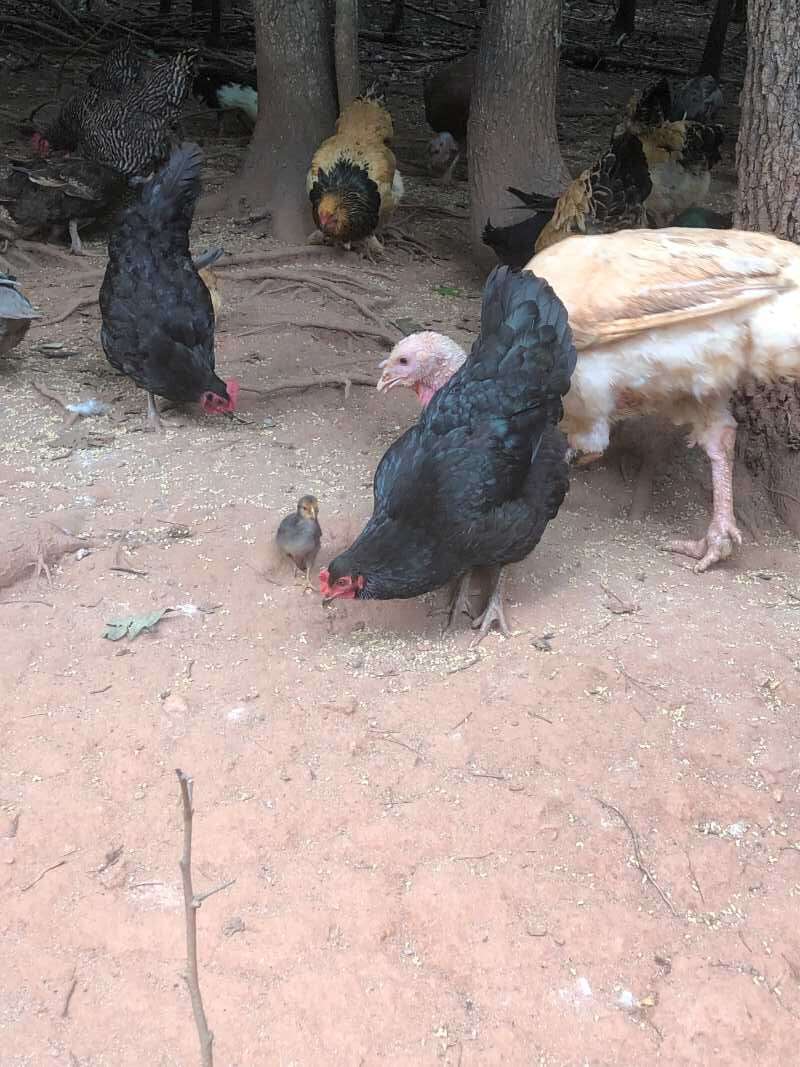
“Hurricane Helene caused us to lose about two-thirds of our chicken products. Our gasoline-powered generator did the best it could. Getting gasoline was extremely difficult. We were without power for 12 days and only permitted to purchase 5 gallons of gasoline each day for the first 3-5 days. We couldn’t keep 200lbs of chicken frozen. With this generous grant, we have been able to procure another freezer and more portable coolers. Therefore, we can store more chicken. We have also been able to acquire our own poultry processing equipment. This saves the cost of equipment rental fees, allows us to raise and process more birds each month, and now we can offer turkey. With this equipment, we can expand our business. It allows us to increase revenue. With increased revenue, we may be able to recoup some of the loss from Helene.”



The ongoing work of EMFS of building capacity, resilience, and connections in the Western North Carolina food system remains vital one year after the storm. Hurricane Helene revealed vulnerabilities, but it also reinforced CEFS’ commitment to a strong and adaptive local food system.
To learn more about Hurricane Helene’s impact on regional food and farming communities please see the recently released Supply Chain Assessment and recording of the SCA webinar here.
Learn more about EmPOWERing Mountain Food Systems, their business development and financial support services, and upcoming events.