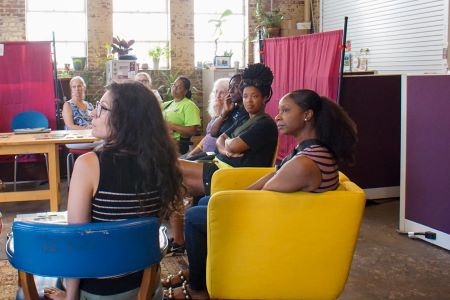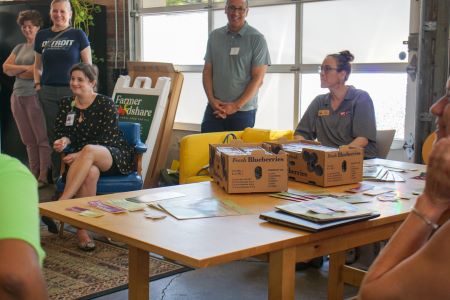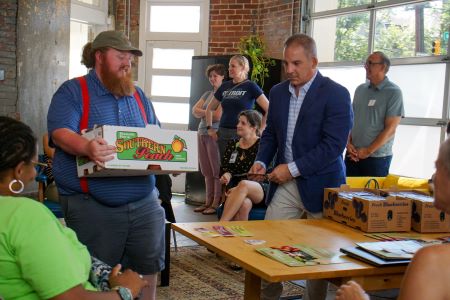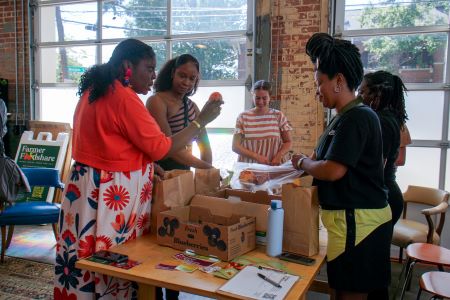

Earlier this month, representatives from the W.K. Kellogg Foundation, along with partners working in early childhood education (ECE), community gardening, and local food systems in Detroit, Michigan, visited North Carolina to learn more about successful Farm to ECE initiatives that integrate local food purchasing.
Organized by Shironda Brown and Dr. Dara Bloom of the Farm to Early Care and Education initiative at the Center for Environmental Farming Systems (CEFS), the multi-day tour highlighted community-based strategies for improving young children’s access to healthy, local food.
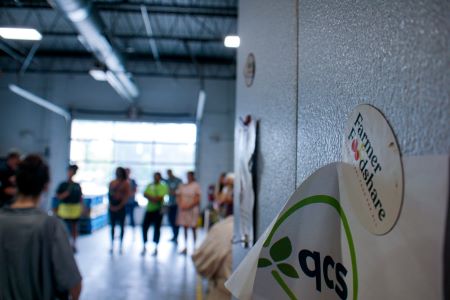
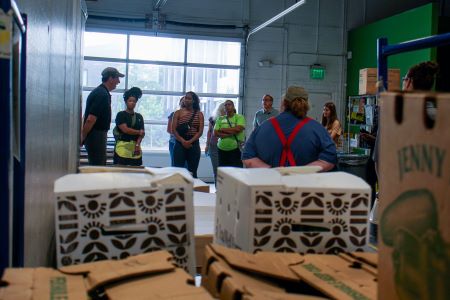
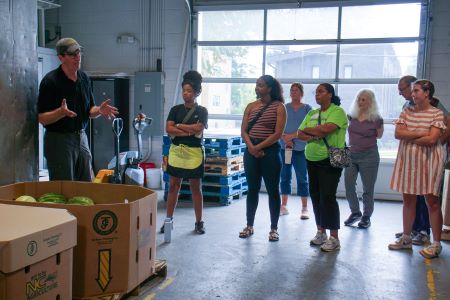
The site visit highlighted innovative local food purchasing models for Farm to ECE that were developed and piloted jointly with community partners through the Farm to ECE initiative’s USDA Regional Food Systems Partnership Program grant. Participants were able to visit Royall Head Start in Goldsboro, NC and their central kitchen (WAGES, Community Action Center), which also prepares meals for seniors. They then followed the supply chain to visit the food hub that they purchased from as part of the project, Working Landscapes in Warren County, which sells chopped produce. The next day they visited A Safe Place Child Care Center in Raleigh to visit their Cross Link location which houses the kitchen used to cook and prepare all local produce and food for the three Safe Place sites daily. Next we visited Bambino’s Play School in Cary, NC, which currently purchases local food from the food hub Farmer FoodShare. The group then visited Farmer FoodShare to learn about their Farm to ECE program, in addition to their other local food programming. This innovative local food purchasing model, supported by Wake County government, combines orders from child care programs in order to increase the volume they order and get wholesale prices, while allowing programs to place individual orders. Along the way, facilitators from Wayne and Wake County Cooperative Extension (Michelle Estrada and Trevor Hyde) and the Wayne and Wake County Smart Start Partnership for Children (Trinisia Carlton, Lynn Policastro, and Tamiko McCullough) explained their roles in supporting and maintaining these purchasing systems, including how they provide hands-on support to food-based learning and gardening, and mentor interns who also provide on-the-ground support.
This visit served as both a celebration of progress and an opportunity to explore future collaboration, ensuring that young children across North Carolina benefit from vibrant, local food systems.